Grumman Aircraft Engineering Corporation
F6F Hellcat
 Steve CarmichaelLast updated April 3, 2026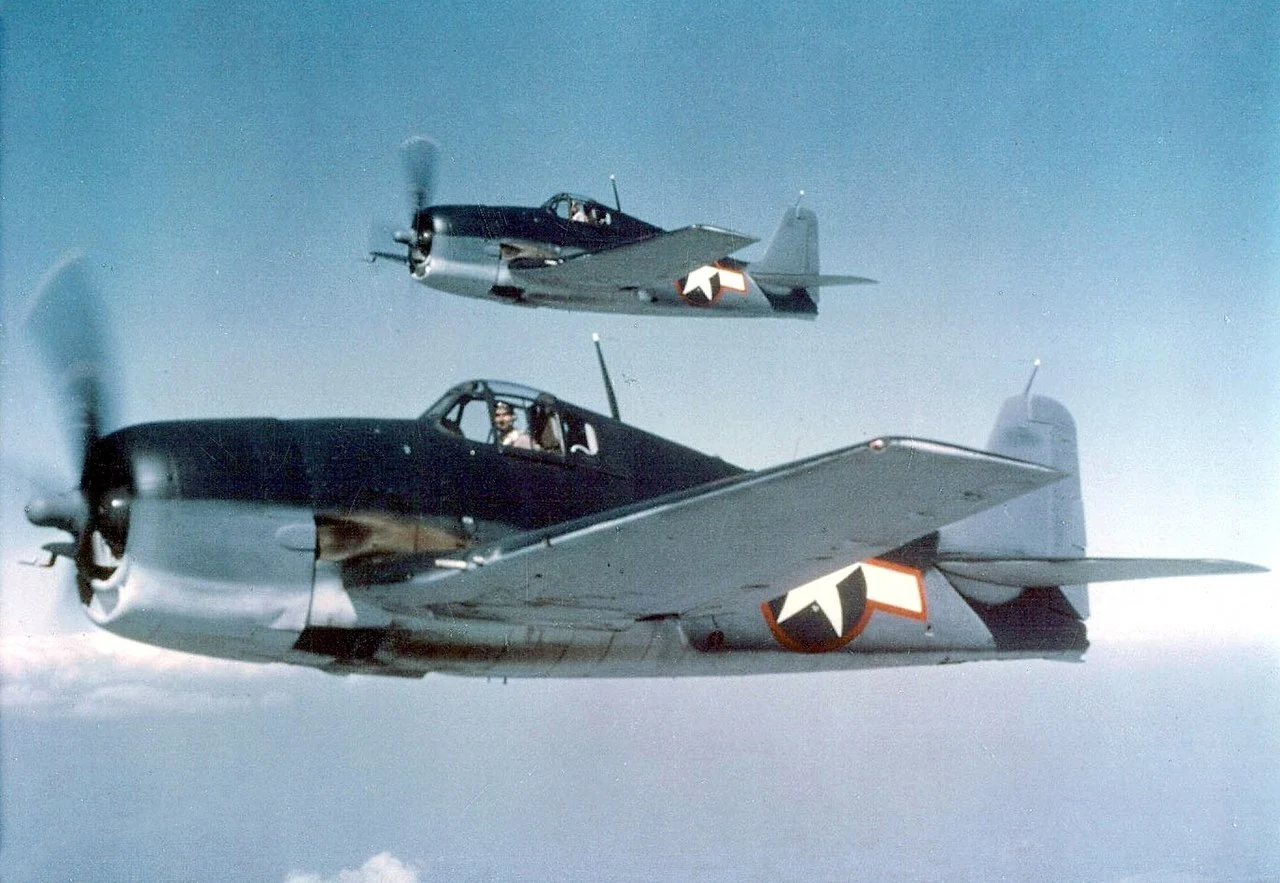
The Grumman F6F Hellcat was the United States Navy's answer to the Mitsubishi A6M Zero, designed after engineers studied a captured A6M2 to identify its weaknesses. Entering combat in late 1943, the Hellcat quickly became the dominant carrier fighter of the Pacific War, credited with 5,223 aerial victories — more than any other Allied naval aircraft. With an extraordinary 19:1 kill ratio and 305 aces to its credit, the Hellcat destroyed Japanese carrier aviation at the Battle of the Philippine Sea and maintained air superiority through the end of the war.
F6F Hellcat at a Glance
- Role
- Fighter
- Manufacturer
- Grumman Aircraft Engineering Corporation
- Nation
- United States
- Era
- World War II
By the Numbers
12,275
Built
270
Combat Losses
12,275
Built
5,223
Aerial Victories
270
Air-Combat Losses
19:1
Kill Ratio
305
Aces Produced
1
Crew
Aircraft Description
The Grumman F6F Hellcat was the United States Navy's dominant carrier-based fighter of the Pacific War, credited with 5,223 aerial victories — more than any other Allied naval aircraft. Designed as the successor to the F4F Wildcat after careful study of a captured A6M2 Zero, the Hellcat achieved a remarkable 19:1 kill ratio against Japanese aircraft. From the Marianas Turkey Shoot onward, the Hellcat established absolute air superiority for the U.S. Navy and produced 305 aces during its combat career.
Paint Schemes and Markings
The F6F Hellcat transitioned through the standard USN color scheme evolution, from the pre-war two-tone through the iconic overall Glossy Sea Blue that it wore during the decisive battles of 1944–45.
- Blue-Gray over Light Gray (1942–43): ANA 606 Blue Gray upper surfaces over ANA 602 Light Gray lower surfaces. Early F6F-3 production and initial fleet deliveries wore this scheme. VF-5 aboard USS Yorktown (CV-10) during the Marcus Island raids in August 1943 carried this finish.
- Tri-Color Scheme (1943–44): ANA 623 Sea Blue upper surfaces, ANA 608 Intermediate Blue fuselage sides, ANA 601 Insignia White lower surfaces. The most commonly depicted Hellcat scheme in period photographs. Applied during the transition from 1943 through mid-1944, covering operations at Tarawa, the Marshall Islands, and Rabaul raids.
- Overall Glossy Sea Blue (1944–45): ANA 623 Glossy Sea Blue on all surfaces. Introduced fleet-wide from early 1944 and applied to the majority of F6F-5 production. This is the scheme worn during the Battle of the Philippine Sea ("Marianas Turkey Shoot"), Leyte Gulf, and Iwo Jima operations — the most popular Hellcat modeling subject.
- Night Fighter Black (F6F-3N / F6F-5N): Overall flat black or Non-Specular Sea Blue (ANA 607) for night fighter variants equipped with AN/APS-6 radar pod mounted under the starboard wing leading edge. VF(N)-76 and VF(N)-101 operated these aircraft from carriers and land bases. Subdued national insignia. A distinctive and dramatic modeling subject.
Design Features
Key engineering and design choices that defined the F6F Hellcat's capabilities.
Wide-Track Landing Gear
The F6F's wide-set main landing gear was specifically designed for the demanding environment of carrier deck operations. The sturdy, widely spaced gear absorbed the punishing impacts of arrested landings and gave the Hellcat stable ground handling on pitching flight decks — a critical advantage over the narrow-track gear of the F4U Corsair that initially kept it off carriers.
Low-Mounted Wing with Armor Protection
Grumman positioned the wing low on the fuselage to keep the center of gravity optimal for carrier landings while integrating substantial armor plating around the cockpit, engine, and oil system. The result was an aircraft that could absorb significant battle damage and bring its pilot home — a Grumman trademark that earned the company the nickname 'Iron Works.'
Rugged Construction for Battle Damage Tolerance
Built to Grumman's exacting structural standards, the Hellcat routinely survived hits that would have destroyed lighter fighters. The airframe incorporated redundant structural members, self-sealing fuel tanks, and armor plating that totaled 212 lbs of protection. Combat reports documented Hellcats returning with entire sections of wing or tail shot away.
Designed from Captured Zero Analysis
The F6F was the first American fighter explicitly designed using intelligence from a captured Mitsubishi A6M2 Zero recovered intact from Akutan Island in June 1942. Grumman engineers studied the Zero's strengths and weaknesses, then designed the Hellcat to exploit every vulnerability — emphasizing speed, firepower, armor, and dive performance over the Zero's lighter, more maneuverable approach.
Interchangeable Parts with TBF Avenger
Grumman deliberately engineered the F6F to share manufacturing tooling, components, and maintenance procedures with the TBF Avenger torpedo bomber already in production. This logistics efficiency meant that carrier air groups could maintain two frontline aircraft types using overlapping spare parts inventories — a practical advantage that reduced the supply burden on the fleet.
Engines & Armament
Powerplant and weapons configuration for the F6F Hellcat's primary production variant.
Powerplant
1x Pratt & Whitney R-2800-10W "Double Wasp" 18-cylinder twin-row radial, 2,000 hp
Armament
6x .50 caliber M2 Browning machine guns; 2,000 lbs bombs or 6x HVAR rockets
Specifications
Key dimensions and performance figures for the F6F Hellcat's primary production variant.
- Crew
- 1
- Length
- 10.24 m(33.6 ft)
- Wingspan
- 13.06 m(42.8 ft)
- Height
- 3.99 m(13.1 ft)
- Wing Area
- 31.03 m²(334 ft²)
- Max Speed
- 621 km/h(386 mph)
Variants & Models
Each F6F Hellcat variant introduced changes to the airframe, engine, or armament. Visual ID features help modelers and spotters distinguish between versions.
F6F-3
4,402
Built
- Powerplant
- 1x P&W R-2800-10, 2,000 hp
- Max Speed
- 611 km/h(380 mph)
Visual ID
Early production Hellcat; three-tone camouflage typical
Initial production variant. Some aircraft fitted with APS-6 radar as F6F-3N night fighter.
F6F-3N
200
Built
- Powerplant
- 1x P&W R-2800-10, 2,000 hp
Visual ID
APS-6 radar pod on starboard wing leading edge
Night fighter variant with APS-6 radar. Approximately 200 produced from F6F-3 airframes.
F6F-5
6,681
Built
- Powerplant
- 1x P&W R-2800-10W, 2,000 hp (with water injection)
- Max Speed
- 621 km/h(386 mph)
Visual ID
Spring-tab ailerons; strengthened wing for external stores; water injection engine
Definitive production variant. R-2800-10W with water injection, spring-tab ailerons, stronger wing rated for bombs and rockets. 6,681 built.
F6F-5N
1,434
Built
- Powerplant
- 1x P&W R-2800-10W, 2,000 hp
Visual ID
APS-6 radar pod on starboard wing; two inboard .50 cals replaced by 20 mm cannon
Night fighter variant. Approximately 1,434 produced. APS-6 radar with 2x 20 mm cannon replacing inboard .50 caliber guns.
F6F-5P
- Powerplant
- 1x P&W R-2800-10W, 2,000 hp
Visual ID
Camera installation in rear fuselage
Photo reconnaissance variant with camera mounted in rear fuselage. Limited production.
Development & Operational Timeline
Key milestones in the F6F Hellcat's journey from design through operational service.
XF6F-1 Contract Awarded
The U.S. Navy awards Grumman the contract for the XF6F-1, initiating development of a new carrier fighter to replace the F4F Wildcat and counter the Japanese Zero.
XF6F-3 Prototype First Flight
The XF6F-3 prototype makes its maiden flight, powered by the Pratt & Whitney R-2800 Double Wasp engine that would define the type's performance advantage over Japanese fighters.
VF-9 Begins Carrier Qualification aboard USS Essex
VF-9 begins carrier qualification trials aboard USS Essex, marking the Hellcat's first steps toward operational carrier deployment.
First Combat: VF-5 Strikes Marcus Island
VF-5 flying F6F-3 Hellcats from USS Yorktown (CV-10) strikes Marcus Island, marking the Hellcat's combat debut. The type quickly proves its superiority over Japanese fighters.
Carrier Raids on Rabaul
Hellcats participate in major carrier strikes against the heavily defended Japanese base at Rabaul, demonstrating the type's ability to operate effectively against concentrated enemy air defenses.
Battle of the Philippine Sea ("Marianas Turkey Shoot")
During the Battle of the Philippine Sea, F6F Hellcats shoot down over 350 Japanese aircraft in a devastating two-day engagement that effectively destroyed Japanese carrier aviation. The lopsided victory earned the nickname "The Great Marianas Turkey Shoot."
VJ-Day and Production Ends
With Japan's surrender, Hellcat production ceases. The F6F has served as the backbone of U.S. Navy carrier fighter operations throughout the final two years of the Pacific War.
Last Operational USN Hellcats Retired
The last operational U.S. Navy Hellcats are retired from service, ending over a decade of frontline and reserve duty for the type.
Combat History
Major engagements and missions that defined the F6F Hellcat's combat record.
WWII Overall Statistical Record
1943-1945Across the full span of Pacific War operations, F6F Hellcats were credited with 5,223 aerial victories against 270 air-combat losses — an extraordinary 19:1 kill ratio. The type produced 305 aces, more than any other Allied naval fighter.
The highest-scoring Allied naval fighter of World War II. The Hellcat's record demonstrated the success of Grumman's design philosophy: build a rugged, powerful fighter that average pilots could fly effectively against experienced opposition.
Marcus Island Raid
August 1943VF-5 flying F6F-3 Hellcats from USS Yorktown (CV-10) conducted the type's first combat strikes against Marcus Island. The Hellcat demonstrated immediate superiority over Japanese opposition in its combat debut.
Marked the operational debut of the F6F Hellcat in combat, validating the design's performance advantages and setting the stage for its dominance in the Pacific air war.
Battle of the Philippine Sea
June 19-20, 1944In the largest carrier battle of the war, F6F Hellcats annihilated Japanese carrier aviation during what became known as the "Great Marianas Turkey Shoot." Over two days, Hellcats shot down more than 350 Japanese aircraft while suffering minimal losses, permanently breaking Japanese naval air power.
The defining engagement of the F6F Hellcat's career. The battle demonstrated the overwhelming qualitative and quantitative superiority of U.S. Navy carrier aviation and effectively ended Japan's ability to project air power from its carriers.
Post-War Service
1945-1954After WWII, Hellcats continued in service with the French Aeronavale in Indochina and were retained by the U.S. Navy as night fighters and drone controllers into the Korean War era. The French employed F6F-5s in combat operations over French Indochina.
Demonstrated the Hellcat's robust design and adaptability beyond its original design parameters, serving effectively in post-war conflicts and specialized roles.
Production & Service
From first flight to retirement — the F6F Hellcat's operational lifespan at a glance.
- Number Built
- 12,275
- First Service
- 1943
- Retired
- 1954
- Combat Losses
- 270
- Status
- Retired
Where to See One
Surviving F6F Hellcat aircraft you can visit today. Airworthy aircraft may appear at air shows.
BuNo 79863
S/N: 79863
Variant: F6F-5
Planes of Fame Air Museum
Chino, USA
14998 Cal Aero Drive, Chino, CA 91710
Planes of Fame
Visit website →Airworthy F6F-5 maintained in flying condition at Planes of Fame, Chino, California
BuNo 94204
S/N: 94204
Variant: F6F-5
Commemorative Air Force
USA
Commemorative Air Force
Airworthy F6F-5 operated by the Commemorative Air Force
F6F-5 (Fighter Factory)
Variant: F6F-5
Fighter Factory
Virginia Beach, USA
1341 Princess Anne Road, Virginia Beach, VA 23457
Fighter Factory
Visit website →F6F-5 under restoration at the Fighter Factory in Virginia Beach, Virginia
BuNo 40467
S/N: 40467
Variant: F6F-3
National Naval Aviation Museum
Pensacola, USA
1750 Radford Boulevard, Suite C, NAS Pensacola, Pensacola, FL 32508
National Naval Aviation Museum
Visit website →F6F-3 on static display at the National Naval Aviation Museum in Pensacola, Florida
F6F-3 (NASM)
Variant: F6F-3
National Air and Space Museum
Washington, D.C., USA
600 Independence Avenue SW, Washington, DC 20560
Smithsonian Institution
Visit website →F6F-3 on display at the National Air and Space Museum
F6F-3K BuNo 41834
S/N: 41834
Variant: F6F-3K
Steven F. Udvar-Hazy Center, National Air and Space Museum
Chantilly, Virginia
Smithsonian Institution
Visit website →F6F-3K drone conversion variant on display at the Udvar-Hazy Center. Originally converted from a standard F6F-3 for use as a radio-controlled target drone.
F6F-5 Hellcat (Fantasy of Flight)
Variant: F6F-5
F6F-5 in the Kermit Weeks collection at Fantasy of Flight in Polk City, Florida.
F6F-5 Hellcat (Museum of Flight)
Variant: F6F-5
F6F-5 on display at the Museum of Flight in Seattle, Washington.
F6F-5 Hellcat (Patriot's Point)
Variant: F6F-5
Patriots Point Naval & Maritime Museum
Mount Pleasant, South Carolina
Patriots Point Naval & Maritime Museum
Visit website →F6F-5 displayed aboard the aircraft carrier USS Yorktown (CV-10) at Patriots Point, one of the most visited naval museums in the United States.
Model Kits Available
Scale model kits of the F6F Hellcat from leading manufacturers.
Browse all aircraft kits →Written by
Steve Carmichael
I am a ww2 model enthusiast getting back into building scaled models after many years away. This site allows me to work on my web development skills while sharing what I am learning.
More Fighter Aircraft
View all → Carrier-Based Fighter
Grumman Aircraft Engineering Corporation
F4F Wildcat
 Fighter
Chance Vought Corporation
F4U Corsair
 Twin-Engine Fighter
Lockheed Aircraft Corporation
P-38 Lightning
 Fighter
Bell Aircraft Corporation
P-39 Airacobra
 Fighter
Curtiss-Wright Corporation
P-40 Warhawk
 Fighter
Republic Aviation Corporation